10 Best Studio Recording Microphone 2026 in the United States
Related Products
Up to 20% off

Recommended lists

Recording Microphones
Our technology thoroughly searches through the online shopping world, reviewing hundreds of sites. We then process and analyze this information, updating in real-time to bring you the latest top-rated products. This way, you always get the best and most current options available.

Our Top Picks
Winner
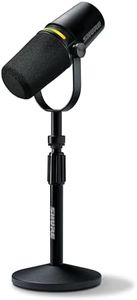
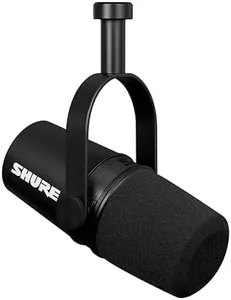
Shure MV7+ Podcast Dynamic Microphone with Stand – OBS Certified, Enhanced Audio, LED Panel, USB-C & XLR Outputs, Auto Level Mode, Digital Pop Filter – for Podcasting, Streaming, and Recording, Black
Most important from
563 reviews
The Shure MV7+ is a dynamic, unidirectional microphone designed primarily for podcasting, streaming, and home recording setups. It excels in capturing clear vocal audio thanks to its voice isolation technology and built-in digital signal processing (DSP), which includes a real-time denoiser that reduces background noise like fans or echoes—ideal for less-than-perfect recording environments. Its frequency response starts at 50 Hz, which suits spoken word and typical vocal ranges, and it offers a sensitivity of 40 dB with a signal-to-noise ratio of 65 dB, meaning it captures voice clearly without too much unwanted noise. The mic’s max sound pressure level isn't explicitly stated, but being dynamic, it handles loud speech well without distortion.
Connectivity is versatile with both USB-C and XLR outputs, allowing beginners to easily connect to computers and professionals to integrate it into advanced audio setups. The accompanying MOTIV Mix app offers customization of sound and mic appearance, adding user-friendly control. The built-in digital pop filter and auto gain adjustment help keep audio smooth, which is great for those who move around or vary their speaking volume. The included adjustable stand and foam windscreen make it a ready-to-use package.
The frequency response might be a bit limited for capturing very deep bass or very high frequencies compared to condenser microphones, and its self-noise level (20 dB audible noise) is average, so very quiet recordings in ultra-quiet rooms might benefit from a different mic type. This mic is a strong choice for podcasters and streamers seeking professional sound quality with easy setup and smart features, though those needing the broadest frequency capture or extremely low noise might consider other types.
Most important from
563 reviews
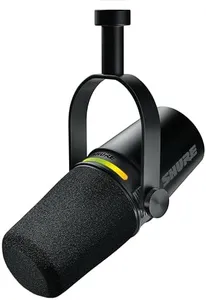
Shure MV7+ Dynamic Microphone – USB-C & XLR Podcast Mic for Streaming, Recording & Broadcasting, OBS Certified, Auto Level Mode, Digital Pop Filter, LED Panel, Black
Most important from
994 reviews
The Shure MV7+ is a versatile studio-recording microphone designed especially for podcasting, streaming, and home studio use. It features a unidirectional polar pattern, which is great for focusing on your voice while minimizing background noise. The mic offers both USB-C and XLR connectivity, making it easy to plug into simple setups or more advanced audio equipment. Its frequency response extends up to 16 kHz, which covers most voice frequencies well, though it may not capture the very highest tones some professional users desire.
One of the standout features is its built-in digital enhancements, such as Auto Level Mode that automatically adjusts your volume as you move, and a real-time denoiser that helps reduce unwanted background sounds. These make home recording simpler, especially if you don’t have perfect acoustics. The included reverb effects add a professional touch to recordings, giving your voice more depth and space without needing extra gear.
The microphone’s LED touch panel is both functional and customizable, allowing quick muting and visual feedback of audio levels, which is handy during live streams or video calls. It’s solidly built from metal, ensuring durability, and comes with essential accessories like a windscreen and cables. Its sensitivity and self-noise levels, while adequate for most podcasting and streaming needs, might not satisfy users looking for ultra-high fidelity studio recordings or musicians needing the broadest frequency range. It requires a computer or audio interface that supports USB or XLR, so beginners without these might need extra gear. The Shure MV7+ is ideal for content creators and home studio users who want a reliable mic with smart features and flexible connections. It balances ease of use with professional audio tools, making it a solid choice for podcasting, streaming, and recording vocals in less-than-perfect environments.
Most important from
994 reviews
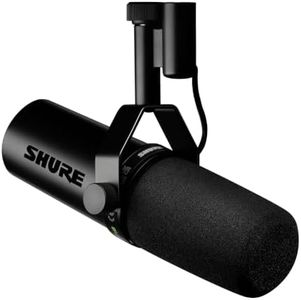
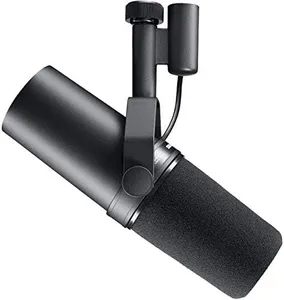
Shure SM7dB Dynamic Studio Microphone with Built-in Preamp – XLR Mic for Podcasting, Streaming & Vocal Recording, Wide Frequency Range, Smooth Warm Audio, Detachable Windscreen, Black
The Shure SM7dB is a dynamic vocal microphone designed for studio recording, streaming, and podcasting. It combines a rugged metal build with a built-in preamp, providing clean, boosted sound without the need for extra gear. This microphone uses a unidirectional (cardioid) polar pattern, which focuses on your voice and reduces unwanted background noise, making it ideal for less-than-perfect recording spaces. It offers a wide frequency response up to 20,000 Hz, capturing natural and smooth vocal tones, and includes features to cut out handling noise and breath sounds, enhancing clarity.
One standout feature is the built-in preamp that provides +18 or +28 dB of gain, simplifying your setup by removing the need for an external booster—an accessory commonly required for dynamic mics. The SM7dB allows users to adjust the sound signature with switches, helping tailor the audio to different voices or instruments. Connectivity is via a standard XLR cable, compatible with most studio equipment.
As a dynamic microphone, it may have higher self-noise compared to condenser mics, which could affect very quiet recordings. It is also on the heavier side, requiring a sturdy stand. While its frequency response is broad, the typical sensitivity of dynamic mics means it needs a good preamp or mixer to achieve the best sound quality, which the built-in preamp helps provide. This microphone is well suited for podcasters, streamers, and vocalists seeking professional-quality vocal capture in a variety of settings without the hassle of additional equipment.